




We’ve all been there. You open ChatGPT or Claude, excited by the hype. You type in a prompt like: “Create a creative lesson plan for Grade 10 , MYP Physics on Inertia.”
You wait for magic.
What you get back is a generic timetable: 10 minutes introduction, 20 minutes reading, 15 minutes worksheet. It feels like something from a 1990s teacher training manual. You sigh, close the tab, and think, “This AI thing is overhyped.”
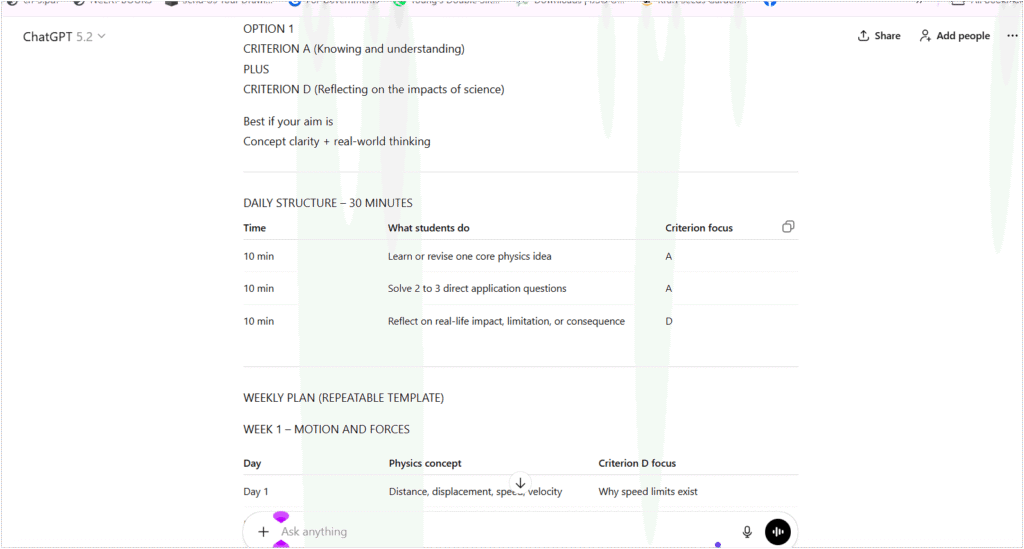
But over the last few years of diving deep into “prompt engineering”—the art of talking to these machines—I’ve realized something uncomfortable. The AI wasn’t failing. My prompts were.
As educators and professionals, we are making a fundamental mistake: We are treating the most powerful cognitive engine ever built like it’s just a faster Google search.
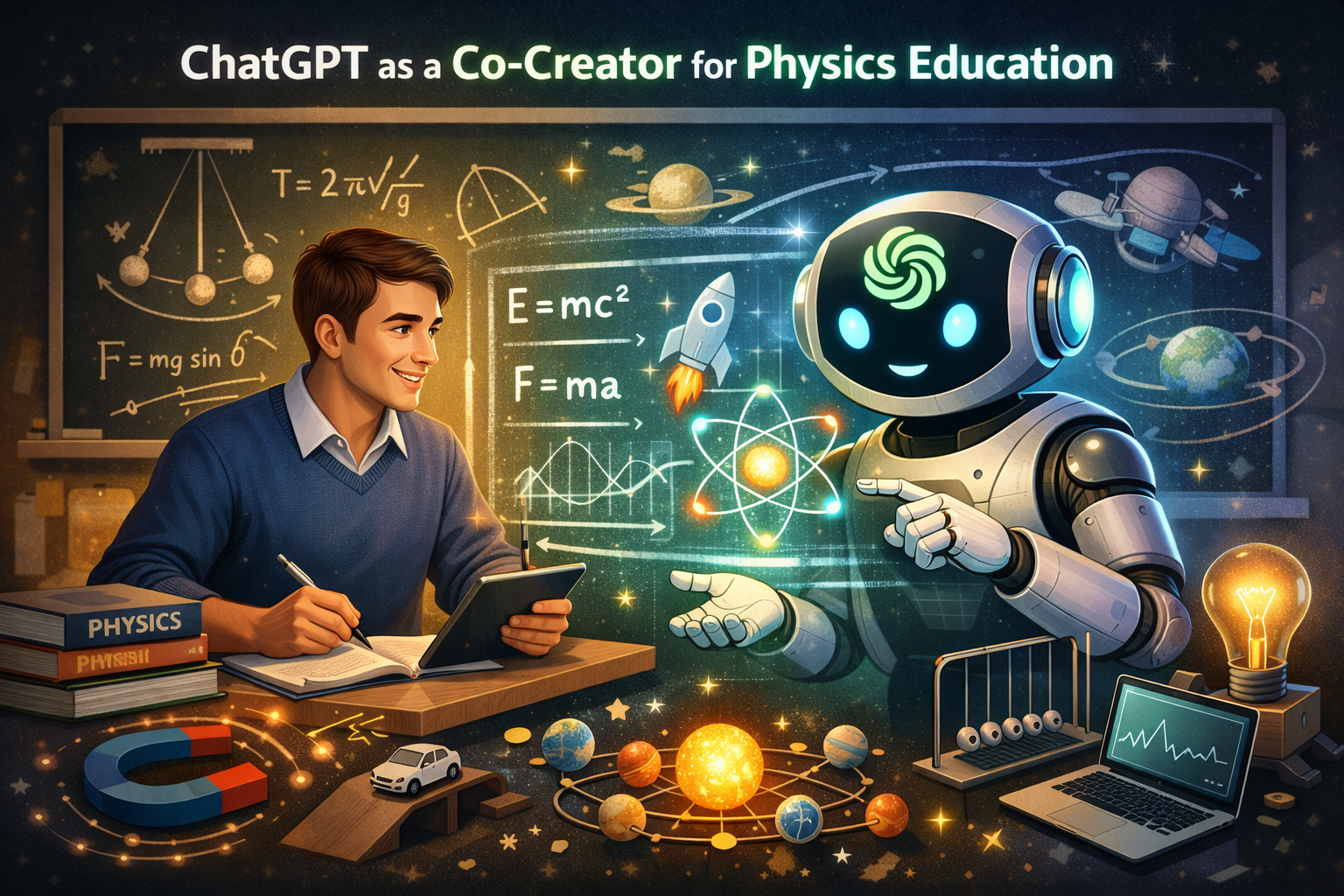
Here is what I’ve learned about why our prompts fail, how to fix them, and why we need to stop fearing AI as a “plagiarism machine” and start seeing it as the ultimate co-creator.
The “Search Engine” Trap
The biggest misconception is that AI is a mind reader. It is not. It is a literalist.
If you ask for a “plan,” it gives you a schedule. If you want a teaching strategy, you must ask for a “pedagogical approach.”
If you ask for a “story about inertia,” the AI looks at its vast database for the most statistically common example. You get the boring story about a bus stopping suddenly. Why? Because that’s the average answer. To get creativity, you have to force the AI off the beaten path.
We are getting average results because we are asking average questions.
Breaking the Myth: Plagiarism vs. Partnership
Before we look at how to use it right, we need to address the elephant in the room: the fear that AI is just a tool for cheating or replacing human thought.
If you use AI to just write your emails or do your students’ homework, yes, that’s hollow. But that’s a failure of imagination, not a failure of technology.
AI is not a substitute teacher; it is a force multiplier.
Think of Steve Jobs’ famous analogy of the computer as a “bicycle for the mind.” A human on a bicycle is more efficient than a human walking, but the human still has to steer and pedal.

AI is your co-creator. If you, the human “pilot,” have no ideas, the AI has no direction. You need to be a critical thinker and a creative problem-solver to get anything good out of it. It requires more human engagement, not less.
How to Turn the “Search Engine” into a “Cognitive Engine”
In my field, Physics teaching, shifting my mindset changed everything. Here is how we move from generic outputs to high-quality learning tools:
1. Content Creation: From Boring to Bold
- The Old Way: “Give me an example of Newton’s First Law.” (Result: A coin on a card over a glass).
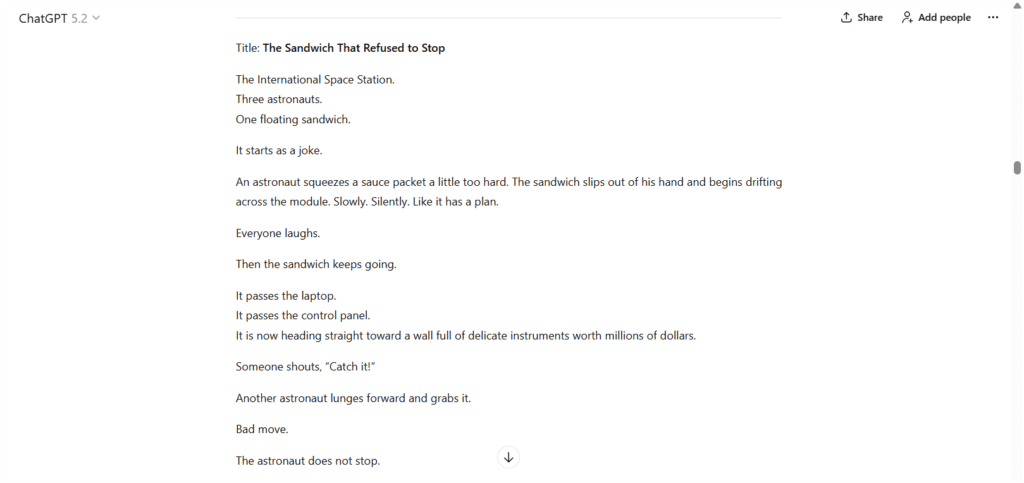
- The Co-Creator Way: “Act as a sci-fi writer. Explain Newton’s First Law using a high-stakes scenario on the International Space Station. Do NOT use examples involving cars or buses.”
- The Result: A gripping narrative about an astronaut and a drifting tool that grabs student attention immediately.
2. Creating Rigorous Assessments
- The Old Way: “Create 5 MCQs on Forces for Grade 10.” (Result: Simple recall questions like “What is the unit of force?”).
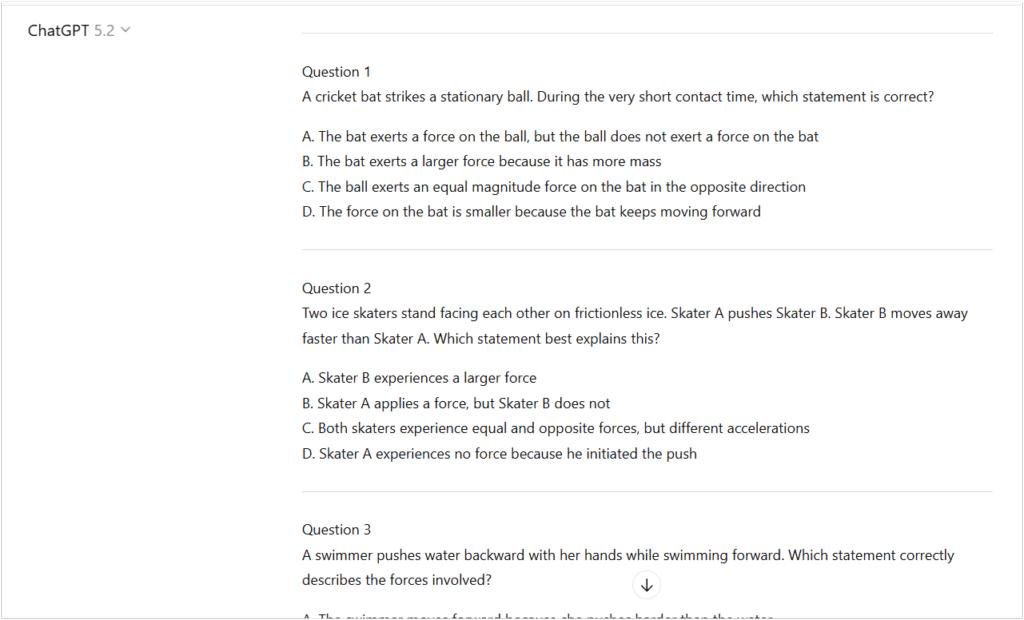
- The Co-Creator Way: “Act as an IB Physics Examiner. Create 5 application-based scenarios. Provide common student misconceptions as the ‘distractor’ answers.”
- The Result: High-level questions that actually test critical thinking, not just memory.
3. Making Learning Visible through Simulation
This is my favorite. We often ask text-based AIs to “create a video game,” which they can’t do. But they can run text simulations.
- The Prompt: “Act as a physics game engine. I am an astronaut stranded 10 meters from safety. Don’t explain the physics to me. Just present the situation, ask me what I do, and calculate the consequences of my actions based on Newton’s Third Law.”
Suddenly, the chat window becomes an interactive “choose your own adventure” where students learn by failing safely.
What NOT To Do
AI is a boon for mankind, but it has guardrails.
- Don’t trust it blindly for facts. It can hallucinate. You are the expert; you must verify the output.
- Don’t use it to replace connection. Use AI to generate the lesson materials so you have more time to spend looking your students in the eye and understanding their needs.
The Future is Co-Creation
These tools enable us to do things we wouldn’t have dreamed of a few years ago—visualizing art through physics equations, running thought experiments without spending a penny, and creating personalized feedback instantly.
Let’s stop using this incredible technology to do boring things faster. Let’s start using it to do better things.
#AIinEducation #EdTech #PromptEngineering #PhysicsTeaching #FutureOfWork #CoCreation #Learning